


12 Feb More Evidence of Boom Time for US (as in “Texas”) Oil & Gas
"I wonder whether it’s sunk in to most Americans just how historic the changes going on right now in oil production in the United States really are (see Figure 1)," economist/blogger Blake Clayton in his recent blog for the nonpartisan Council of Foreign Relations. What's he talking about? 2011's radical trend in the US Oil & Gas business: we're exporting more than we're importing. USA Today calls it a "mini oil boom."
Figure 1. U.S. Net Imports of Petroleum Products (1993–2011)

I have extended family in East Texas. One of the friendliest neighbors there, a 65 year old man, came out of retirement eight months ago to take a full time job to driving 2 hours each way to work five 12 hour shifts a week. What causes a 65 year old man to work 14 hours a day? In this case it ain't desperation, he says the money is too good. (Think strong six figures.) He's a an oil refinery safety manger in Beaumont, TX. The Texas oil & gas refinery industry is going bonkers, scaling up for a big future — which the media is apparently not covering. Mr. Neighbor says the O & G refineries in this area are expanding so aggressively they've got guys working around the clock, 12 on 12 hour shifts. He says there's nowhere to stay, rent, or live in the Texas refinery zone of Beaumont/Port Arthur, and he says one hour of his commute each day is spent trying to get "from one end of the parking lot to the other" at the plant in Beaumont.
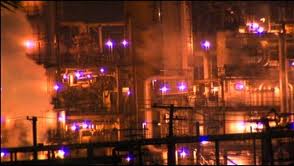
Here's What Refineries Look Like

Here's a Map of Texas/Louisiana O&G Refineries 2011 (by me)

Map data, via EIA, shows total production per town and rank of refineries
in each town out of America's top 100 O&G refineries.
Click to enlarge.
No Comments